

Magic truffles are sclerotia: firm, compact lumps of fungal mycelium that certain psilocybin-producing fungi form below the surface as a reserve. That is what magic truffles are biologically: neither mushrooms nor culinary truffles. In practical terms, they are a natural product that contains psilocybin and psilocin, that is sold fresh, and that in the Netherlands is legal because the 2008 mushroom ban did not include it.
Key takeaways
- Magic truffles are sclerotia: compact, hardened masses of mycelium that some psilocybin-producing fungi form as a reserve.
- Sclerotia do not produce spores; they are a survival structure that can later resume growth.
- Psilocybe mexicana, the species Hofmann used to isolate psilocybin in 1958, is one of the species that can form sclerotia.
- Magic truffles contain psilocybin, which the body converts into psilocin, the active compound.
- Because sclerotia were not covered by the 2008 Dutch mushroom ban, magic truffles are sold legally in the Netherlands.
In this article
What exactly is a sclerotium?
A sclerotium is a dense mass of mycelium that a fungus builds as a survival structure. The plural is sclerotia, and the word comes from the Greek skleros, meaning hard.
To see why fungi make them, it helps to picture how a fungus lives. Most of the organism is mycelium: a web of microscopic threads, called hyphae, spreading through its food source. That web is efficient at feeding but vulnerable. If the environment turns dry or cold, loose threads die off. Some species hedge against this by drawing part of the mycelium together into tight knots, packing them with stored nutrients and giving them a tougher outer layer. The result is a sclerotium, which can wait out bad conditions and grow again when they improve.
The other way a fungus deals with the future is to fruit. Mushrooms are fruiting bodies: short-lived structures that rise above the surface and spread spores. A sclerotium does neither of those things. It stays put and keeps the organism itself going. That is why the two can come from the same species and still differ so much in texture and appearance.
How do magic truffles form?
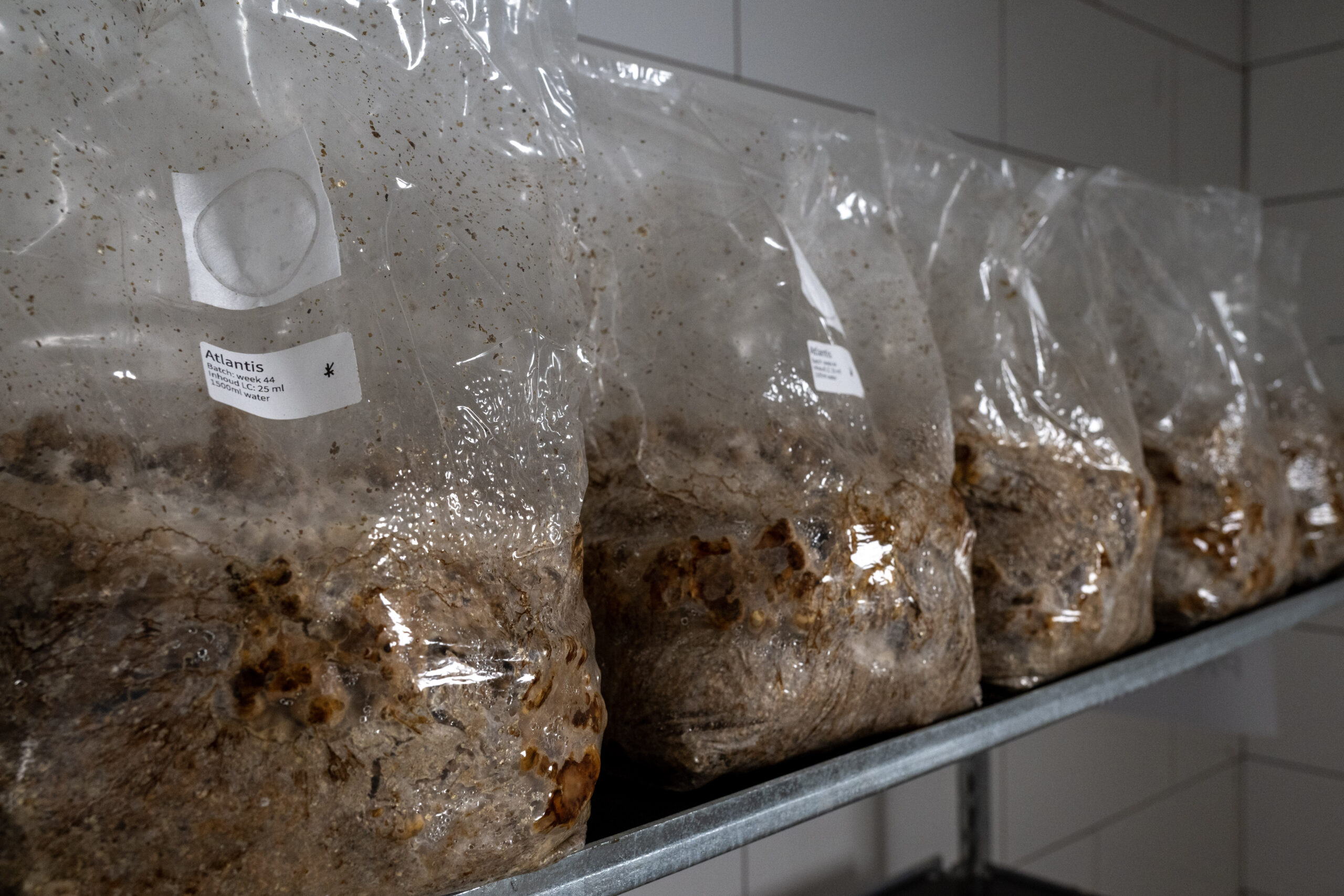
Magic truffles form when the mycelium of a suitable species, under conditions that favour a reserve over fruiting, gathers into lumps within its substrate. In nature that is a response to environment. In cultivation, growers set up conditions that steer the fungus towards sclerotia instead of mushrooms, and then harvest the lumps.
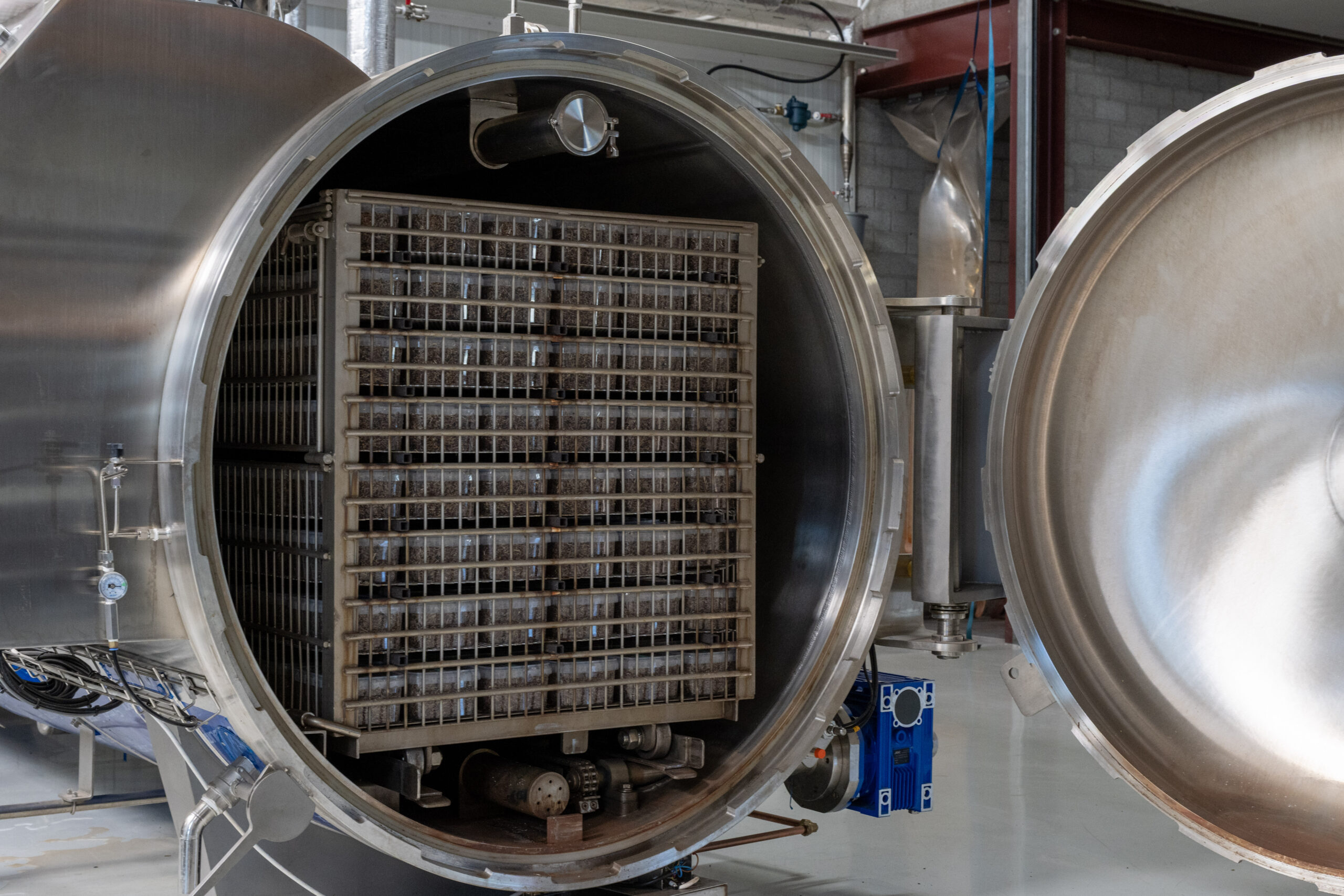
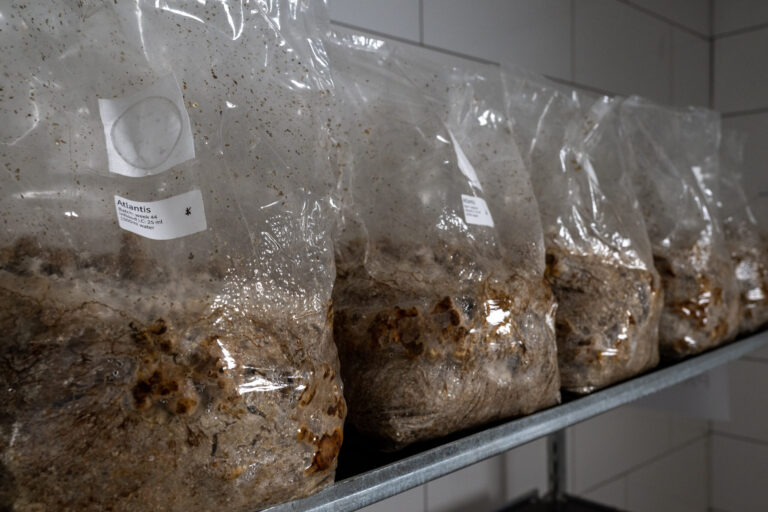
The process takes considerably longer than growing mushrooms, and it rewards control over the environment: temperature, humidity, hygiene and the substrate all affect whether sclerotia form and how they develop. Contamination by moulds or bacteria is the constant risk, which is one reason why serious growers keep production in-house rather than buying in material of unknown origin.
Once harvested, the truffles look like small, irregular nuggets, pale brown to golden on the outside and lighter inside. Their firmness is typical of a sclerotium. A fresh truffle is still a living, perishable product, which is why it is normally packed in sealed pouches.
Which species produce magic truffles?
Only some psilocybin-producing species form sclerotia, and they are the ones used for magic truffles. The best known are Psilocybe mexicana and Psilocybe tampanensis. The widely cultivated Psilocybe cubensis, by contrast, is known for its mushrooms.
Psilocybe mexicana has a place in scientific history. In 1957 R. Gordon Wasson’s article in Life magazine, “Seeking the Magic Mushroom”, described the Mazatec mushroom ceremony he had attended with the curandera María Sabina in Oaxaca and brought it to Western attention. Albert Hofmann at Sandoz then isolated psilocybin and psilocin from Psilocybe mexicana, published in Experientia in 1958, and later synthesised psilocybin. The species that made psilocybin known to science is also one that makes truffles.
What do magic truffles contain?
Magic truffles contain psilocybin and psilocin, the same active compounds found in magic mushrooms. Psilocybin acts as a prodrug: according to Passie et al. (2002), the body removes a phosphate group from it to produce psilocin, which is the compound that acts in the brain. Our article on how truffles compare with mushrooms covers the overlap in more detail.
Psilocybin is not the only tryptamine in these fungi. Gotvaldová et al. (2021), in Drug Testing and Analysis, measured psilocybin and four related analogs in Psilocybe cubensis and showed that storage conditions strongly influence how fast psilocybin breaks down. That work was done on mushroom biomass, not sclerotia, so it is only indicative for truffles. It does make the general point that content is not fixed. It varies with species, growing conditions, age and handling.
That variability is the reason we do not quote figures for psilocybin content, and the reason you should not rely on figures quoted elsewhere without knowing how and on what they were measured.
Why does the sclerotium form matter?
For buyers, the form matters in three ways: the law, freshness and predictability.
The law
On 1 December 2008 psilocybin-containing mushrooms were added to List II of the Dutch Opium Act (Staatsblad 2008, 486). Sclerotia were not covered by that measure. As a result, magic truffles are sold legally to adults in Dutch smartshops, while fresh and dried mushrooms are not. Psilocybin and psilocin as substances are on List I. This is specific to the Netherlands. In many other countries psilocybin truffles are illegal, so readers abroad should check their local law and should not assume that taking truffles across a border is allowed.
Freshness
A fresh truffle is perishable in the way any fresh food is. Air, warmth, light and moisture all work against it, and once a sealed pack is opened the clock runs faster. Vacuum-sealed, resealable packaging exists for that reason. The packaging and product page tell you how a specific product should be kept.
Predictability
Because natural content varies, the way truffles are portioned matters. Pre-portioned products take the guesswork about splitting or weighing out of the buyer’s hands, which is exactly where mistakes happen. For anything to do with how much or how often, follow the packaging and product page, and consult a doctor or a harm-reduction service such as the Trimbos Institute’s drugsinfo.nl.
What should you look for when buying magic truffles?
Look for a seller who is transparent about where the truffles come from and careful about how they are packed and labelled. A short checklist:
- Origin. Does the seller grow the truffles, and say where?
- Packaging. Are they sealed against air, ideally vacuum-sealed and resealable?
- Portioning. Are portions clearly separated and labelled on the pack?
- Age check. Does the seller enforce 18+?
- Legal clarity. Is the seller clear that legality depends on your country?
- No miracle claims. Avoid sellers who say truffles treat or cure anything. The evidence does not support it, and saying so is a sign of how the rest of the business is run.
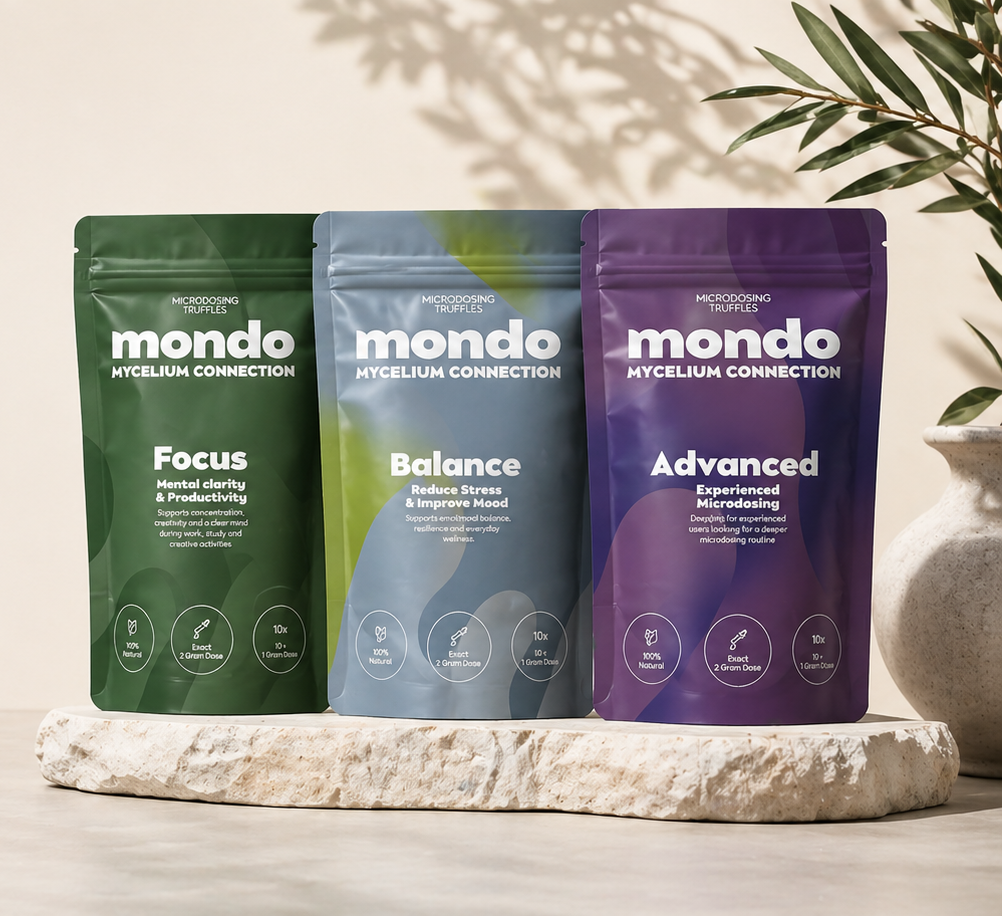
Mondo has grown its truffles in-house in Purmerend since 2009, the year after the Dutch mushroom ban, and the background on Mondo explains the company’s history. The truffles are sold fresh, in individually pre-dosed portions in resealable vacuum-sealed pouches, in three blends: Focus, Balance and Advanced, the last for experienced users. All three are listed in the magic truffle shop.
Are magic truffles safe?
Psilocybin has low physiological toxicity, but magic truffles are not suitable for everyone. Gable (2004), comparing the acute toxicity of psychoactive substances in Addiction, placed psilocybin among those with the widest margin between an effective and a lethal dose. The Dutch review by van Amsterdam, Opperhuizen and van den Brink (2011) found low harm potential and no addiction, with behavioural risks such as panic and accidents being the main concern.
Lithium, MAOIs, and a personal or family history of psychosis or bipolar I disorder are serious reasons not to use them, and the effects of any prescription medication should be discussed with a doctor first. Never stop or change medication on your own. For the wider picture, start with our introduction to what microdosing is and the general principles in the microdosing guide.
Frequently asked questions
Are magic truffles the same as magic mushrooms?
They come from the same kinds of fungi and contain the same active compounds, psilocybin and psilocin, but they are different structures. Mushrooms are fruiting bodies that grow above ground and release spores. Magic truffles are sclerotia, compact underground reserves of mycelium. In the Netherlands, only the mushrooms fall under the 2008 ban.
Why are they called truffles?
The name is a trade name based on appearance. Sclerotia are firm, irregular lumps that look a little like culinary truffles, so smartshops began calling them magic truffles. Biologically they have nothing to do with culinary truffles, which are the fruiting bodies of entirely different fungi and contain no psilocybin.
Do all psilocybin fungi produce truffles?
No. Only some species form sclerotia. Psilocybe mexicana and Psilocybe tampanensis are the best-known examples. Psilocybe cubensis, the species most often grown for mushrooms, is not used for truffles. The species matters because it shapes what the truffle contains and how it grows.
How much psilocybin is in a magic truffle?
There is no fixed figure. Content varies with species, growing conditions, age and storage, and research on mushroom material shows that storage strongly affects how quickly psilocybin breaks down. We do not publish content or amounts. For guidance on any specific product, follow its packaging and product page, and ask a doctor or harm-reduction service if unsure.
Are magic truffles legal outside the Netherlands?
Often not. The Dutch position comes from the fact that sclerotia were left out of the 2008 measure that banned psilocybin mushrooms. Many other countries treat psilocybin truffles as illegal. Check your local law before buying, and do not assume that carrying or sending truffles across a border is allowed.
Sources
- Hofmann A, et al. (1958). Isolation of psilocybin and psilocin from Psilocybe mexicana (Experientia)
- Dutch Opium Act amendment, Staatsblad 2008, 486 (psilocybin mushrooms added to List II; sclerotia not included). Harm-reduction information: Trimbos Institute, drugsinfo.nl Link
- Gotvaldová K, et al. (2021). Stability of psilocybin and its four analogs in the biomass of the psychotropic mushroom Psilocybe cubensis. Drug Testing and Analysis 13(2):439–446
- Passie T, et al. (2002). The pharmacology of psilocybin. Addiction Biology 7(4):357–364
- Gable RS (2004). Comparison of acute lethal toxicity of commonly abused psychoactive substances. Addiction 99(6):686–696
- van Amsterdam J, Opperhuizen A, van den Brink W (2011). Harm potential of magic mushroom use: a review. Regulatory Toxicology and Pharmacology 59(3):423–429
This article is general information, not medical advice. Magic truffles are legal in the Netherlands but prohibited in many other countries, so check your local law. 18+ only. If you use medication or have a medical or mental health condition, consult your doctor first.
Keep reading
Magic Truffles vs Magic Mushrooms: What’s the Difference?
Magic truffles and magic mushrooms share their active compounds. What separates them is biology, texture and, in the Netherlands, the law.
Inside the Production of Premium Microdosing Truffles
Premium microdosing truffles are carefully cultivated and prepared under controlled conditions to ensure consistency, freshness and quality in every dose. From mycelium development and…
What Does the Research Actually Say About Microdosing?
The more rigorous the study, the smaller the effect. A walk through the microdosing research, from surveys to placebo-controlled trials.